Saturday, December 17, 2011

Westward American Road Diary: Route 66, the Hoover Dam and Area 51


An iconic image of Route 66 in Arizona captured in 1953 in Life magazine.

There's a scene in the film Dirty Dancing where a man bemoans to a father that no one wants to come to summer resorts like his in the Catskills anymore. Trips to Europe are all the rage now among the kids. As we traveled the American West we kept seeing signs for "Historic Route 66" and finally took one of the roads in Seligman, Arizona, I felt the ghosts of a time of booming American road travel and discovery. I didn't know much about Route 66 before this trip, other than some references in popular culture. Some history notes from Wikipedia on Route 66,

"The National Historic Route 66 Federation was founded in 1995 for the purpose of saving the businesses, communities and roadbed of Route 66. The famous road carried travelers across much of the country from the day it was commissioned on November 11, 1926 through June 25, 1985 when it was decommissioned.

Since its birth, most motorists preferred it because the weather tended to be more hospitable than along the more northerly highways. Businesses and entire towns sprang up to cater to the ever-increasing traffic. Although it brought considerable prosperity, the thoroughfare also spawned bumper-to-bumper congestion in the communities and numerous accidents on the rural stretches leading to the gruesome nickname, "Bloody 66."

Just as it seemed the mostly two lane road could not handle another vehicle, on June 29, 1956, President Dwight Eisenhower signed the Interstate Highway Act into law which allocated $25 billion for the construction of 41,000 miles (66,000 km) of interstate highway. Over the next 29 years, section after section of Route 66 was methodically bypassed by multi-lane, high speed expressways enabling motorists to increase their speeds, significantly. This was a time-saving advantage to those on the move, but a distinct disadvantage to businesses and communities along the Route. Where customers once thronged, they rarely showed up at all, anymore."

You'll see images of icons like James Dean, Elvis Presley and Marilyn Monroe everywhere. I wonder if there will be cutouts of Lady Gaga that tourists will snap photos of fifty years from now? Maybe because Dean and Monroe didn't grow old - no grey hairs or wrinkles, no few extra pounds each year - that they are so captured in time. Myself - I long for a time when "stars" had actual talent and lifted us up to the sky, and didn't have to rely so heavily on shock value or stunts.

A pink Cadillac. I love the style of these older cars. "Style" is what I think of clothes, cars, and architecture of earlier eras likes the fifties. I don't know if there's a lot of "style" now. What do you think?

Made America, thank you! So many tourist trinkets (and many other goods) have a Made in China sticker. Bring back manufacturing jobs! I hope corporations start to figure out soon that if Americans don't have jobs, they won't have money to take a vacation, go out to eat, buy a sweater, and such.

Breakfast at Westside Lilo's Cafe. I forgot how much I love cinnamon toast. I remember checking out a cookbook as a kid in elementary school and cinnamon toast was one of the recipes. Isn't it curious what the heart remembers?

We hear about the Gold Rush in California in our history classes, but less so about the Silver Rush in Nevada, which is the second largest producer of silver in the country after Alaska, according to Wikipedia. Several prospectors in 1859 discovered a rich lode silver ore in the Comstock Lodge, which was a minor gold placer district since 1849. A great rush of miners came eastward from California, but the district has been mostly inactive since the 1920s. How little I thought about the origins of silver until now.

The Rough Guide to the Southwest tells us "The Hoover Dam...was designed to block the Colorado River and provide low-cost electricity for the cities of the Southwest, it's among the tallest dams ever built (760 ft high), and is made of enough concrete to build a two-lane highway from the West Coast to New York. It was completed in 1935." Most tourists like myself come here before Las Vegas, snap their photos and head to Sin City. Curious about labor history and those built this, I discovered this on Wikipedia,


"Soon after the dam was authorized, increasing numbers of unemployed converged on southern Nevada. Las Vegas, then a small city of some 5,000, saw between 10,000 and 20,000 unemployed descend on it. A government camp was established for surveyors and other personnel near the dam site; this soon became surrounded by a squatters' camp...Once construction began, Six Companies hired large numbers of workers, with more than 3,000 on the payroll by 1932 and with employment peaking at 5,251 in July 1934. "Mongolian" (Chinese) labor was forbidden by the construction contract, while the number of blacks employed by Six Companies never exceeded thirty, mostly lowest-pay-scale laborers in a segregated crew, who were issued separate water buckets...

The site of Hoover Dam endures extremely hot weather, but the summer of 1931 was especially torrid, with the daytime high averaging 119.9 °F (48.8 °C). Sixteen workers and other riverbank residents died of heat prostration between June 25 and July 26."

Do you think the masses would descend if such massive projects were developed now? Some people I've spoken to think the government should be providing for projects that develop alternative energy and road repair that would supply such jobs. It's food for thought as we go into the next election and also ponder the state of jobs in America.

We are now on the Extraterrestrial Highway looking for an entry to Area 51 because of two men: Bob Lazar and my alien-obsessed boyfriend Steve.

Lazar, according to Wikipedia, "has said to have worked from 1988 until 1989 as a physicist at an area called S-4 (Sector Four), allegedly located near Groom Lake, Nevada, at the location also known as Area 51. According to Lazar, S-4 served as a hidden military location for the study and possible reverse engineering of extraterrestrial flying saucers. Lazar says he saw nine different discs there and provides details on their mode of propulsion. However, his credibility has come under fire after "schools he was supposed to have attended had no record of him, while others in the scientific community had no memory of ever meeting him."

Steve keeps telling me my book club at work (which meets sporadically) should read Mack Maloney's, "UFOs in Wartime: What They Don't Want You to Know." It actually sounds pretty intriguing.

Farmer's mailbox? Transporter of secret messages? You be the judge. On the other side of this someone scribbled, "Don't Drink Starbucks!"

Little A'Le'Inn in Rachel, Nevada.

You can stay at the motel or dine here. We sat a table next to the bar. There was a husband and his wife with their daughter a few tables away and I was tempted to ask, "Which one of you is the true believer and who is here for moral support? I'm the latter." It's not that I'm a non-believer, I'm just not the enthusiast Steve is, which is why I'll be watching a Ginger Rogers film in the bedroom while he's watching Ancient Aliens on the History Channel in the living room.

Steve had a burger with some special alien sauce. I had the homemade pumpkin pie and coffee.

The landscape between Rachel and Las Vegas was haunting.

It felt dreamlike. A dream I didn't want to waken from.

Wednesday, December 14, 2011

Westward American Road Diary: The Grand Canyon

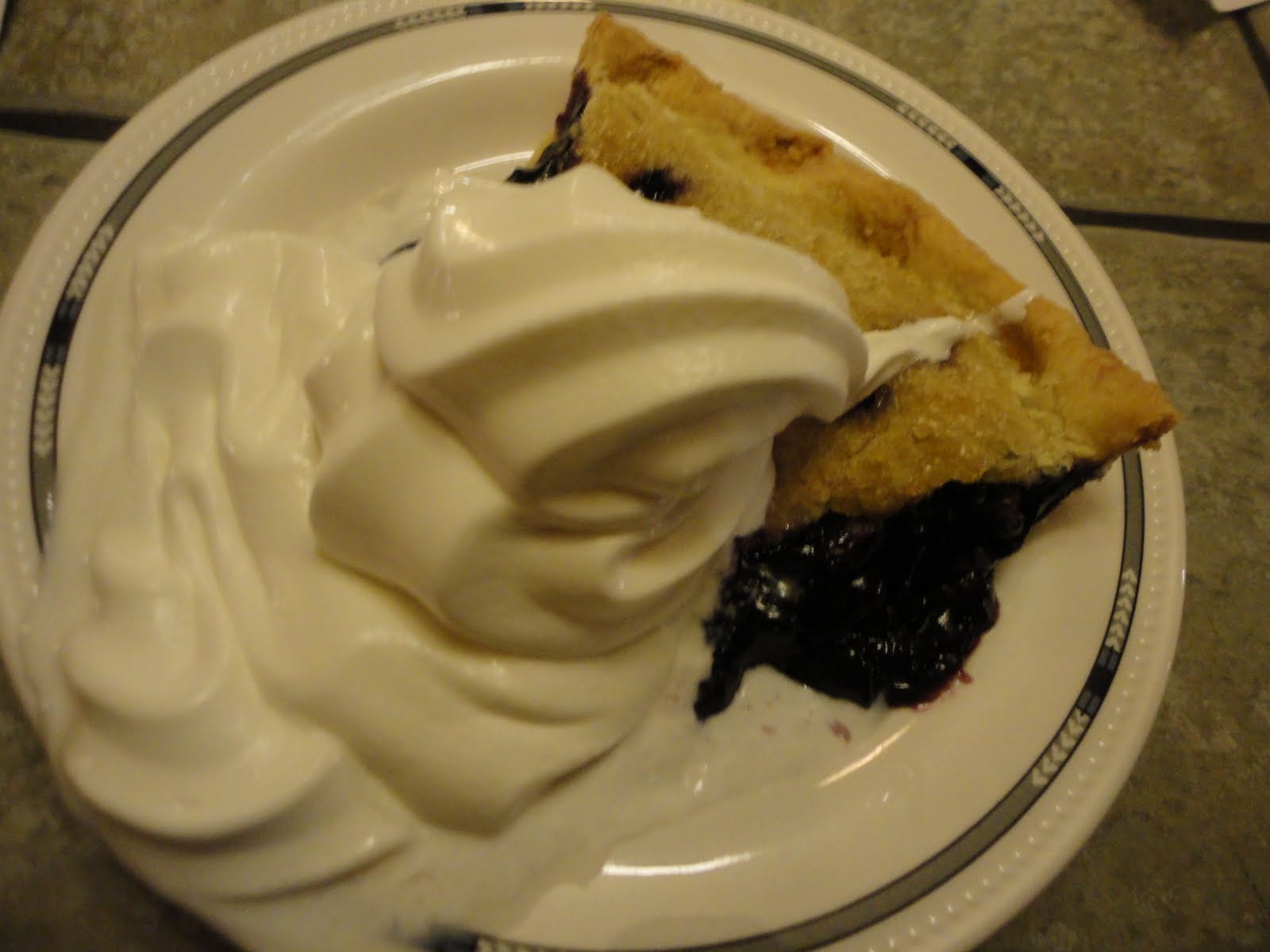
Some foods instantly transport you back in time and place. Blueberry pie will forever be associated with my American West road trip. And this was just some of the best blueberry pie I've had ever, at the Jacob Lake Inn's restaurant in Jacob Lake, Arizona. I had to eat it at the counter. There's something about eating pie at a counter.

A much more sensible breakfast! The six grain cereal with fruit and whole wheat toast, grapefruit juice and Earl Grey tea at the inn's restaurant.

A lot of places were closed for the season and we happened upon the inn. It's one of those classic Americana places that remain family owned that you're glad still exist, maybe for a sense of permanence.

At the North Rim, where we stopped briefly before heading to the South Rim (a few hours drive, by the way). The North Rim gets a tenth of the visitors as the South, in part because it's not as developed with lodges, restaurants and such. The Rough Guide to the Southwest says it offers a "splendid sense of isolation." There was definitely a calmer feeling here.

"Made a friend of the Western sky." - Tori Amos, Honey

The legendary Roy Rogers, yet I haven't seen any of his movies either. Oh my!

Everyone says the pictures don't do it justice. True.


The Ooh Aah lookout point.

Donkeys taking a rest on the trail. I won't lie: I felt kind of bad for the donkeys lugging tourists around.

A morbid choice for the park's best selling book. Steve and I couldn't stop flipping through it in the bookstore.

A call to conserve.

Vegetarian chili in a sourdough bread bowl washed down with apple juice at the Bright Angel Restaurant. I was longing for a good bowl of chili on this trip. I ate here for dinner too: roasted red pepper soup, veggie tortellini and angel food cake with strawberries.

We slumbered one night at the Xanterra Lodge in the canyon (about $140 for two with the Triple A discount). After Durango we didn't book any places and stayed here on a whim after being exhausted from driving.

We were supposed to be bound for the Petrified Forest and Painted Desert next, but an unexpected snow storm (seriously?!) and a need to change rental cars in Flagstaff due to a scary sounding transmission derailed our plans. Next stop: Historic Route 66, then Vegas here we come (with some aliens mixed in too, again!)

Saturday, December 10, 2011

Westward American Road Diary: Utah, Part 3 (Bryce and Zion)

On the road to Bryce, we stopped at this quaint country store. Hard to find an authentic general store in New Jersey nowadays in our 7 Eleven world. I don't need a slurpee, give me a general store.

I was a little lonesome for Rick Steves, a born storyteller who is my tour guide via book on my European travels, but the Rough Guide to the Southwest USA was a good companion too. On Bryce Canyon National Park, they say, "The current name comes from the Mormon settler Ebenezer Bryce, who established a short-lived homestead nearby in 1874 and memorably declared it was "a helluva place to lose a cow." In fact, however, "Bryce's Canyon" is not a canyon at all but a row of crescent-shaped amphitheaters."

Rough Guide says..."Paiute Indians, who hunted in the vicinity for many generations, had an elegantly precise word for the landscape: Unkatimpe-we-Wince-Pockich, "red rocks standing like men in a bowl-shaped recess."

All the hiking on this trip was doable for a cubicle dweller like myself, just the elevation did impact me again here (later in the Grand Canyon too) and left me short of breath. The landscape took my breath away too.

As I look out my kitchen window while I type this, I view a sea of houses. My heart more fondly remembers looking through a window into the wilderness. Wilderness. Wild. I need more "wild." Civilization doesn't feel so civilized lately anyway.

You'll see little trail markers in all the parks, but someone decided to start a whole village of them, and you can add your own.

A Bryce raven knowingly looks into the distance.

Back on the road.

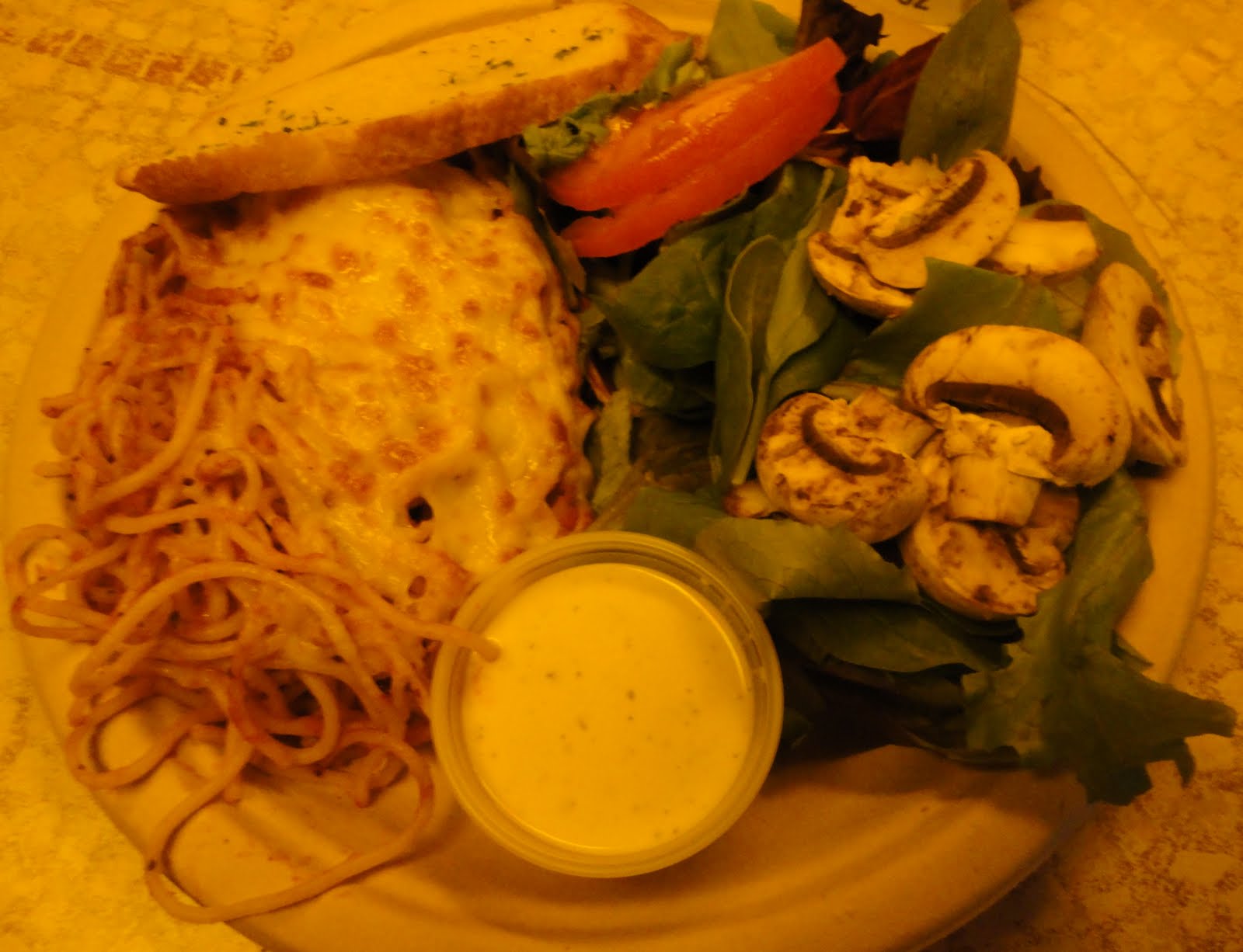
Not a sensible breakfast at all before hiking! Nor was the fettuccine alfredo with garlic bread I consumed for dinner the evening before at a little Americana restaurant we ate at twice. Some notes on pancakes from foodtimeline:

"Pancakes have long been a staple of the American breakfast table, and their history is as old as that of the Native Americans who shaped a soft batter in their hands and called it, in the Narragansett, nokehick (it is soft), transmuted by early white settlers into "no cake." Cornmeal pancakes were called "Indian cakes" as early as 1607. The Dutch in America made similar cakes from buckwheat, panekoeken, which by 1740 were called "buckwheat cakes." English settlers brought with them the feast of Pancake Tuesday, an old name for Shrove Tuesday, the day before the Lenten fast begins...By 1745 Americans were also referring to hoe cakes," perhaps because they were cooked on a flat hoe blade...One of the most beloved versions of this simple cake is the Johnnycake [also known as journey cake], specifically associated with Rhode Island...The word "pancake" itself was not in general usage until the 1870s."
- Encyclopedia of American Food and Drink, John F. Mariani.

Buffalo, once nearly extinct due to human greed.

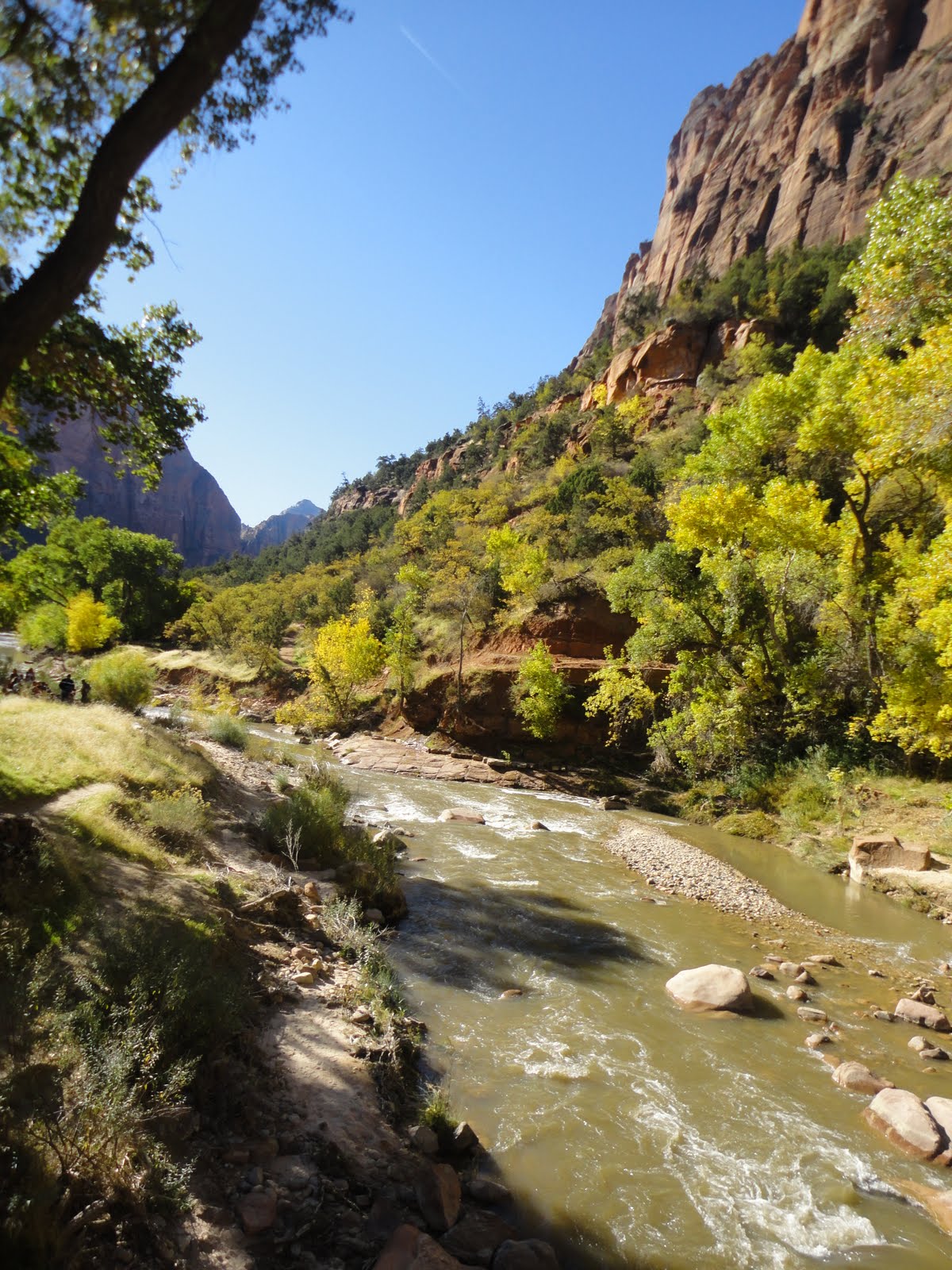
Zion National Park is Utah's most popular park. From the Rough Guide,

"Isaac Behunin, who set up a log cabin in 1862 where Zion Lodge now stands, dubbed the canyon "Little Zion" in the hope that it would be a place of refuge for beleaguered Mormons. Some of his fellow farmers were soon taking things too easy; Brigham Young thundered that their indulgence in tobacco and wine made the name "Not Zion" more appropriate. In the long run, Zion Canyon proved too narrow to support efficient farming."

Our hike took me as far as Scout Lookout to photograph Angel's Landing. Six people have died scaling it since 2004. I'm surprised it's not more. You can't see it, but there are chains alongside which people use to get to the top. Steve reached almost the top and turned back. I got queasy just taking the photo and still feel so looking at it now. He said it was because he left me waiting for so long, had forgotten his camera and was a bit weak because we kept leaving our lunches we picked up at local supermarkets in the car and was hungry. But I think it was his gut feeling. When we were in Switzerland we passed a cemetery of people who died climbing the Matterhorn. Dying young doing what you love doesn't comfort me.

The people were the paparazzi, the target: Mother Nature. I have never seen so many tripods out with amateur and professional photographers and painters and sketchers. I love this celebration of nature. No one's sketching their iPads, right?

Water and the sun - both which give us life - come down on the land.

A deer treading quietly.

Next: The Grand Canyon.

Thursday, December 8, 2011

Westward American Road Diary: Utah, Part 2


Before this trip, Steve and I never heard of John Wesley Powell, the one-armed Civil War veteran who led expeditions through the Grand Canyon and much of the West, when our young nation's maps were not fully drawn, and lands were uncharted, at least by those who sought to claim it. We just so happened to be in lodging in Green River for the night and visited the John Wesley Powell museum the next morning. Steve was eager to get to Bryce, but we took our own uncharted course this day, which happened to be Halloween. Nature awaited, but so did history. Aside from the leisure enjoyment, I love travel as a part of continuing education. I never want to stop learning. I have so much more to learn. I hope you embrace learning and discovery too.

John Wesley Powell had strong views on how the government should dole out its resources and even proposed dividing the states by water lines. His views are considered prophetic knowing the water issues the West now faces, and all signs are pointing toward future wars not over oil, but water. Who are the prophets in more recent times? Was it Jacques Cousteau warning decades ago of what he saw in the ocean? I think of the horror of the Great Pacific Garbage Patch. Josh Fox telling us of the follies of natural gas drilling? Whenever I see feel-good ads on television by an oil company, I smell something fishy. There's a commercial where an American family is in a kitchen excited for cheaper energy so they can have more money to go out to dinner. So what if someone's water supply gets permanently damaged?

All that seems scary. Goblin Valley State Park seemed like an appropriate place to be on Halloween.


Some history from "The Rough Guide to the Southwest USA," which I got at a library book sale for about 35 cents. Three cheers for thrifty living!

"The small patch of barren desert became a park for the simple reason its clay-like rock formations are funny. The man who first noticed them, in the 1940s, called it Mushroom Valley, but "goblin" is as good a name as any. In the 1999 movie Galaxy Quest, a sci-fi spoof, Goblin Valley doubles believably as an alien planet."


Capitol Reef National Park, the second largest of Utah's five national parks but least visited, was one of my favorites. I agreed with the guidebook, "the word "reef" seems to confuse visitors. It refers to the fact that the hundred-mile rock wall thrust up by the Waterpocket Fold presented an almost impenetrable obstacle to nineteenth-century travelers, who therefore likened it to a reef on the ocean. Add the resemblance of rounded "knobs" of white sandstone that top its central section to the dome of the US Capitol in Washington, and you have "Capitol Reef.""

The village's old orchards hold three thousand trees planted by the pioneers.

Not a sight you see in New Jersey! Tourists, not cowboys, seemed to be helping out drive this cattle herd.

Imagine living here with your brothers and sisters, many of whom had to sleep in cutouts in the wall.

The Behunin family lived this way.


A range of emotions fill me when looking a Fruita's one room school house, constructed in 1896 but with no pupils since 1941. Children were taught in the early years in the winter so they could help with the farming in the rest of the year.

You might think of this image romantically, or maybe you think of the great progress we made. Or perhaps both. I think of McGuffey readers, the Little House series, less complicated times. But I'm grateful for educational opportunities too.

I think a lot about how little we value history in education, but our own family histories are undervalued. I'm always looking up the history of everything from a hot fudge sundae to the name behind a river, but I want to know more about my family history before it's lost. I need to know cherished family recipes in English (most are in the Swiss-German dialect in handwritten cookbooks, others maybe just in my mother's memory). We all won't have a plaque documenting our time for those who follow.

There was a little audio box outside of Merin Smith's Shed and the farmer spoke of the hard life they had, but so much of it good. The fruit they harvested. The quiet times in the winter with the women quilting and reading. The dances. The differences were some, one supported one party versus another, but mostly he looked back with a happy heart.

The land here is like none I've ever known. This is sacred country.


Our schedules this year fated us to come here in the fall. I couldn't have imagined a better time.

At the Rim Rock Spaghetti Western Cafe, I had to get, what else, the baked spaghetti, with garlic bread and a salad with ranch dressing. I left contented (I think carbs get a bad name) and curious about spaghetti Westerns. I haven't seen any. We stayed at the quaint motel here attached to the cafe for a night's slumber.


Clearly, Utah has left my mind racing and full of questions. Next: Bryce and Zion.