"Sometimes when Rose was reading, she would catch a whiff of the musty smell of her book. She put her nose down in the fold and inhaled deeply so that wonderful smell, the smell of adventure in faraway lands, would fill her up. She rubbed her hand across the pages to feel the velvety surface of the paper. When she closed her eyes, her fingertips could even feel the words that were printed there, each letter raised just a little, almost like the special language that her blind aunt Mary could read.
To Rose, a book was as real and alive as if it breathed and walked and spoke." - From Roger Lea MacBride's "In the Land of the Big Red Apple," a novel of Rose Wilder Lane's childhood in Mansfield, Missouri with her yet-to-be famous parents, Laura Ingalls Wilder and Almanzo Wilder
My nearly two-year-old daughter Grace is fascinated with books. She often plucks my own books from my hands and flips through the pages as if trying to decipher a mystery. No fancy images, just words. There's magic in here, I tell her. I love the feel of a real book too, and the adventures they bring me on. How I miss traveling, I told my husband Steve, as we've taken day trip staycations with Grace for convenience and budgetary reasons the last two years. I miss those road trips, just being out there with the land, an almost religious experience. But I travel in time and space through the portal of books, and they invoke memories of past travels too.
With all of the award season hoopla given to films and those who participate in them, I wish we had a public equivalent celebrating authors. Michael Punke, author of The Revenant, doesn't seem to get the glory Leonardo DiCaprio is receiving, even though he was the one who brought the story to life. As much as our society and politicians talk about education, it seems like we value materialism and sports far more than pursuits of intellectual betterment. For me, reading is an essential part of lifelong education.
One of my favorite scenes in the film The Age of Adaline starring Blake Lively is when Adaline is being courted by Ellis and he says he is going to bring her flowers. He surprises her with a trio of books with flower names: White Oleander by Janet Finch, Daisy Miller by Henry James and Dandelion Wine by Ray Bradbury. When I looked up Dandelion Wine on Amazon, I noticed customers who purchased it also bought the other two. I guess I wasn't the only one smitten with this scene. The film was poorly reviewed by critics, but I loved the magical feel of it, the time travel, the fashion, the San Francisco setting, and of course the nod to books.
I don't have a reading goal, just to have books, and the beauty of words, in my life, just as I want the beauty of nature to never escape my notice. I am including passages of favorite quotes from my year-end storytellers. Thank you storytellers, for bringing this magic into my life.
"You may hate being pregnant, but the minute the baby is born, she is God's precious child, given to you as a gift." - A Quilt for Christmas by Sandra Dallas.
A major reason I haven't been blogging, aside from caring for Grace, is I am expecting another daughter due in late May or early June. I've simply been too tired or not feeling well to get onto the computer to write, or when I'm not taking care of household matters, want to purse other interests in my free time when Grace is sleeping, like reading, of course.
Tulips and bleeding hearts returning to my garden each spring. Isn't the miracle of life amazing? I cannot wait to meet the little soul that is growing inside me this winter, waiting for her spring.

Walking along New York City's High Line. With all the craze over gym memberships, exercise equipment, DVDs and fad diets this time of year, isn't there something so wonderful in the simple beauty of just going for a walk? Not to mention it's free. I believe so firmly in the merits of walking, for body and mind.


"Rose carefully and gently pushed the growing pile of rosy-golden apples around each time another crate was dumped into the wagon.
 She waded carefully through the apples without lifting her feet, so she wouldn't step on a single one. Soon the whole wagon box was a sea of red and yellow, full almost to the top. She wanted to dive right in, it looked so inviting. She picked two of the reddest ones she could find, gave one to Mama, and they each took a bite.
"Delicious," said Mama through a mouthful, the juice running down her chin. "If there were no other food in the world, I think I could live on apples alone."
Hers was the sweetest apple Rose could ever remember eating.” - In the Land of the Big Red Apple by Roger Lea MacBride.
Pictured above a bin of apples from an apple picking outing at Twin Star Orchards in New Paltz, New York. We took a day trip here in October and I am including some photos for memory's sake. Travel, even just an outing for a day, is on an equal level of books as a great passion and pleasure in life.

I agree with their motto of "ugly apples taste better." Nothing is worse than a perfect looking red delicious apple from a supermarket. Give me an ugly apple any day.


 "You showed me there is something in the forest to cure most anything that bothers you." - The Constable's Tale: A Novel of Colonial America, by Donald Smith
In Muir Woods in California on our honeymoon. I believe in the magical and healing properties of the forest, for mind, body and spirit.

"Old age. I don't know when it really starts, and I'm not interested in finding out. Julia pretty much ignored the whole thing, and that may be the only real lesson there is for the end of our days. Just pretend like it isn't happening, until you have no choice but to accept reality. If you're lucky, like Julia, you'll die peacefully in your sleep after having enjoyed a dinner of onion soup." - Julia Child Rules: Lessons on Savoring Life by Karen Karbo
An onion soup at Pigalle in New York City, an old lunch haunt when I worked in the city. I turned 40 this year and I look forward to all the days ahead granted to me. I'm thrilled if I make it to old age.

"It's a great idea to analyze how screen time has changed your life and how it alters your behavior. If you don't like what you see, implement changes. Get comfortable again with real human connection and don't give so much power to the screen and what is behind it. Real life is in the present moment, happening right now. We never know how many days we have in front of us. Let's live them fully, not virtually." - Polish Your Poise with Madame Chic: Lessons in Everyday Elegance by Jennifer L. Scott, who also pens one of my favorite blogs, The Daily Connoisseur.
Have you seen the Rashida Jones advertisements for Verizon? One features her visiting her mother who ignores her when she tells her daughter to turn off her Wi-Fi. Her mother cannot wait to sit down and look at her tablet. Another has Rashida running out on a friend on movie night since the film isn't downloading fast enough. Apparently conversation must be a thing of the past. The most recent has her mother and two others visiting Rashida and they get carried away on how fast her network is. She tries to engage in conversation over a hot drink, but everyone is glued to their devices. The ad ends, "Get out of the past. Get Fios." Meant to be humorous, these commercials do not leave me laughing. I want to run back into the past sometimes. While there's so much that is wonderful about technology, the anti-social behavior of teens and adults and the addiction to these devices is a serious matter. What values are corporate America selling us?
No one was glassy-eyed, looking at their screens, scrolling mindlessly, when my mother brought over a homemade plum tart we enjoyed with coffee on the patio one warm day. The only tweets at that moment: birdsong.

"On the following morning the little hut on the Alm opened wide its doors and windows as if to drink up the early sunshine. Days went by. The warmth of the spring sun woke up first the little blue gentians - those with a white star in the center; then, one by one, all the other lovely flowers opened their petals. There were jonquils and red primroses and little golden rockroses with thorns on the edge of their petals. They all bloomed in their brightest colors while Peter watched the miracle taking place, as he had watched it every spring since he could remember. He had never quite seen the beauty of it, however, until Heidi had come to show him." - Heidi Grows Up by Charles Tritten, the first of two sequels written by Johanna Spyri's translator
Wildflowers in Rainier National Park in Washington state. My mother introduced me to the beauty of flowers as I have childhood memories of her garden, and I remember my grandparents' garden in Switzerland too, with pictures of my grandmother and mother if front of their blooming geraniums and my grandfather standing by giant sunflowers. Our society is so materialistic and we so emphasis "stuff" and upgrading, but we forget about what can be most fulfilling to the soul.

"She turned away, after a long moment, still speechless. It seemed to her that at last she had seen such splendour that, wherever she went, it would stay before her eyes. No matter what happened, she had lived through this moment. Even if she should go to the dismal old chateau there would still be something - something to which she could turn when she needed courage." - Heidi's Children by Charles Tritten
A courtyard in Santa Fe, New Mexico. I recall many of our travels fondly, and so often find my mind returning to the sacred, enchanting lands of the Southwest. That's what I love about travel, even if you are there for a short while, and maybe only once in your life, the memories linger far beyond. The same holds true for books.

"Still, who knew how the old mountain took retribution for having its insides clawed out.” - Whiter Than Snow by Sandra Dallas, a novel set in 1920 in a Colorado mining town
In Colorado, driving on the road from Durango into the mining town of Silverton. An oil spill caused by an EPA cleanup crew at a mine near Silverton has devastated the water supply, something we take for granted until it's tainted. Have we treated the mountains fairly in our nation's short history? Hardly.

"They ravaged neither the rivers nor the forest, and if they irrigated, they took as little water as would serve their needs. The land and all that it bore they treated with consideration; not attempting to improve it, they never desecrated it." - Death Comes for the Archbishop by Willa Cather
At the New York Botanical Garden, a reminder we must care for our earth.

"Lincoln's heartbeat picked up a little, the way it always did when he rounded that last bend in the road and saw home waiting up ahead.
Home." - A Creed Country Christmas by Linda Lael Miller
Home to me always evokes happy thoughts of my husband, daughter, our two dogs, our wonderful neighbors, a place for a cup of tea, a comfortable bed, a fire on the patio, my cherished garden.

A storyteller at the Ramapough Powwow. Whether in written or oral form, let the wonder of stories fill your life with a little magic.

Goodreads is a favorite site to keep track of my reading lists (read and to-read) as well as quotes. I loved my storytellers and want to seek out more works by many of them, although Linda Lael Miller, whose books I read from library displays, isn't my cup of tea so I don't think I would read her again. Since we're a one-income family as I'm a stay-at-home mom, I'm using the library more than ever now, and we rarely see movies in theatres, enjoying the privacy and sanctuary of our own home and the frugality of free library DVDs.
These were my 2015 storytellers:
Gifts: (I requested the von Arnim and Scott books.)
At Home With Madame Chic: Becoming a Connoisseur of Daily Life by Jennifer L. Scott
Elizabeth and Her German Garden by Elizabeth von Arnim
Bringing Up Bebe: One American Mother Discovers the Wisdom of French Parenting by Pamela Druckerman
Polish Your Poise with Madame Chic: Lessons in Everyday Elegance by Jennifer L. Scott
Gifts for Grace:
Beatrix Potter: The Complete Tales
Winnie-the-Pooh, by A.A. Milne
When We Were Very Young by A.A. Milne
Christmas in the Morning by Pearl S. Buck
A Child's Christmas in Wales by Dylan Thomas
Loan from a friend:
The Shoemaker's Wife by Adriana Trigiani
Thrift Shop:
Cannery Row by John Steinbeck, 50 cents from the C.A.T.S. Resale Shop in Westwood, New Jersey
Better World Books, my favorite go-to online used book retailer for great prices, efforts to promote recycling (many books are library discards) and promoting literacy around the world.
The Indifferent Stars Above: The Harrowing Saga of a Donner Party Bride by Daniel James Brown, $4
Frightful's Mountain, by Jean Craighead George, $2.50.
The Solitary Summer by Elizabeth Von Arnim, $4
The Blue Jay's Dance: A Birth Year by Louise Erdrich, $4
Whiter Than Snow by Sandra Dallas, $4
Charlotte in New York by Joan MacPhail Knight, $4, a gift I bought for Grace's first birthday for her library.
Charlotte in London by Joan MacPhail Knight, $4, also for Grace,
Local Book Shop:
When Calls the Heart by Janette Oke, from The Well Read book store in Hawthorne, New Jersey, about $15.
Library
Brookfield Days, Caroline #1, by Maria D. Wilkes, from the Little House Chapter Books series, from the library
A Moveable Feast by Ernest Hemingway
Springwater by Linda Lae Miller
Living the Farm Sanctuary Life: The Ultimate Guide to Eating Mindfully, Living Longer, and Feeling Better Every Day by Gene Baur with Gene Stone
To Kill a Mockingbird by Harper Lee
Go Set a Watchman by Harper Lee
Clara's Kitchen: Wisdom, Memories, and Recipes from the Great Depression by Clara Cannucciari
Of Mice and Men by John Steinbeck
In the Land of the Big Red Apple, by Roger Lea MacBride (library book sale)
The Constable's Tale: A Novel of Colonial America by Donald Smith
Julia Child Rules: Lessons on Savoring Life by Karen Karbo
Heidi Grows Up by Charles Tritten
Heidi's Children by Charles Tritten
A Creed Country Christmas by Linda Lael Miller
A Quilt for Christmas by Sandra Dallas
To Rose, a book was as real and alive as if it breathed and walked and spoke." - From Roger Lea MacBride's "In the Land of the Big Red Apple," a novel of Rose Wilder Lane's childhood in Mansfield, Missouri with her yet-to-be famous parents, Laura Ingalls Wilder and Almanzo Wilder
My nearly two-year-old daughter Grace is fascinated with books. She often plucks my own books from my hands and flips through the pages as if trying to decipher a mystery. No fancy images, just words. There's magic in here, I tell her. I love the feel of a real book too, and the adventures they bring me on. How I miss traveling, I told my husband Steve, as we've taken day trip staycations with Grace for convenience and budgetary reasons the last two years. I miss those road trips, just being out there with the land, an almost religious experience. But I travel in time and space through the portal of books, and they invoke memories of past travels too.
With all of the award season hoopla given to films and those who participate in them, I wish we had a public equivalent celebrating authors. Michael Punke, author of The Revenant, doesn't seem to get the glory Leonardo DiCaprio is receiving, even though he was the one who brought the story to life. As much as our society and politicians talk about education, it seems like we value materialism and sports far more than pursuits of intellectual betterment. For me, reading is an essential part of lifelong education.
One of my favorite scenes in the film The Age of Adaline starring Blake Lively is when Adaline is being courted by Ellis and he says he is going to bring her flowers. He surprises her with a trio of books with flower names: White Oleander by Janet Finch, Daisy Miller by Henry James and Dandelion Wine by Ray Bradbury. When I looked up Dandelion Wine on Amazon, I noticed customers who purchased it also bought the other two. I guess I wasn't the only one smitten with this scene. The film was poorly reviewed by critics, but I loved the magical feel of it, the time travel, the fashion, the San Francisco setting, and of course the nod to books.
I don't have a reading goal, just to have books, and the beauty of words, in my life, just as I want the beauty of nature to never escape my notice. I am including passages of favorite quotes from my year-end storytellers. Thank you storytellers, for bringing this magic into my life.
"You may hate being pregnant, but the minute the baby is born, she is God's precious child, given to you as a gift." - A Quilt for Christmas by Sandra Dallas.
A major reason I haven't been blogging, aside from caring for Grace, is I am expecting another daughter due in late May or early June. I've simply been too tired or not feeling well to get onto the computer to write, or when I'm not taking care of household matters, want to purse other interests in my free time when Grace is sleeping, like reading, of course.
Tulips and bleeding hearts returning to my garden each spring. Isn't the miracle of life amazing? I cannot wait to meet the little soul that is growing inside me this winter, waiting for her spring.

"It would seem she has everything she could want - she is fed, carried, she is rocked, put to sleep. But no, walking is the thing, the consuming urge to seize control. She has to walk to gain entrance to the world. From now on, she will get from here to there more and more by her own effort. As she goes, she will notice worn grass, shops or snow or the shapes of trees. She will walk for reasons other than to get somewhere in particular. She'll walk to think or not to think, to leave the body, which is often the same as becoming at one with it. She will walk to ward off anger in its many forms. For pleasure, purpose, or to grieve. She'll walk until the world slows down, until her brain lets go of everything behind and until her eyes see only the next step. She'll walk until her feet hurt, her muscles tremble, until here eyes are numb with looking. She'll walk until her sense of balance is the one thing left and the rest of the world is balanced, too, and eventually, if we do the growing up right, she will walk away from us." The Blue Jay's Dance: A Birth Year by Louise Erdrich
Walking along New York City's High Line. With all the craze over gym memberships, exercise equipment, DVDs and fad diets this time of year, isn't there something so wonderful in the simple beauty of just going for a walk? Not to mention it's free. I believe so firmly in the merits of walking, for body and mind.

I can't resist including another quote from The Birth Year.
"Full of the usual blights, mistakes, ruinous beetles and parasites, glorious for one week, bedraggled the next, my actual garden is always a mixed bag. As usual, it will fall far short of the imagined perfection. It is a chore. Hard work. I'll by turns aggressively weed and ignore it. The ground I tend sustains me in early summer, but the garden of the spirit is the place I go when the wind howls. This lush and fragrant expectation has a longer growing season than the plot of earth I'll hoe for the rest of the year. Raised in the mind's eye, nurtured by the faithful composting of orange rinds and tea leaves and ideas, it is finally the wintergarden that produces the true flowering, the saving vision."
At the show of Mexican artist Frida Kahlo at the New York Botanical Garden this fall. We have a family membership here and also recently saw the holiday train show. I have such a euphoric feeling being here, and it's one of my favorite places in New York. With such a mild winter we've been experiencing thus far I know I have no right to be daydreaming about gardens so often, but I can't help myself.

"Rose carefully and gently pushed the growing pile of rosy-golden apples around each time another crate was dumped into the wagon.

"Delicious," said Mama through a mouthful, the juice running down her chin. "If there were no other food in the world, I think I could live on apples alone."
Hers was the sweetest apple Rose could ever remember eating.” - In the Land of the Big Red Apple by Roger Lea MacBride.
Pictured above a bin of apples from an apple picking outing at Twin Star Orchards in New Paltz, New York. We took a day trip here in October and I am including some photos for memory's sake. Travel, even just an outing for a day, is on an equal level of books as a great passion and pleasure in life.

I agree with their motto of "ugly apples taste better." Nothing is worse than a perfect looking red delicious apple from a supermarket. Give me an ugly apple any day.

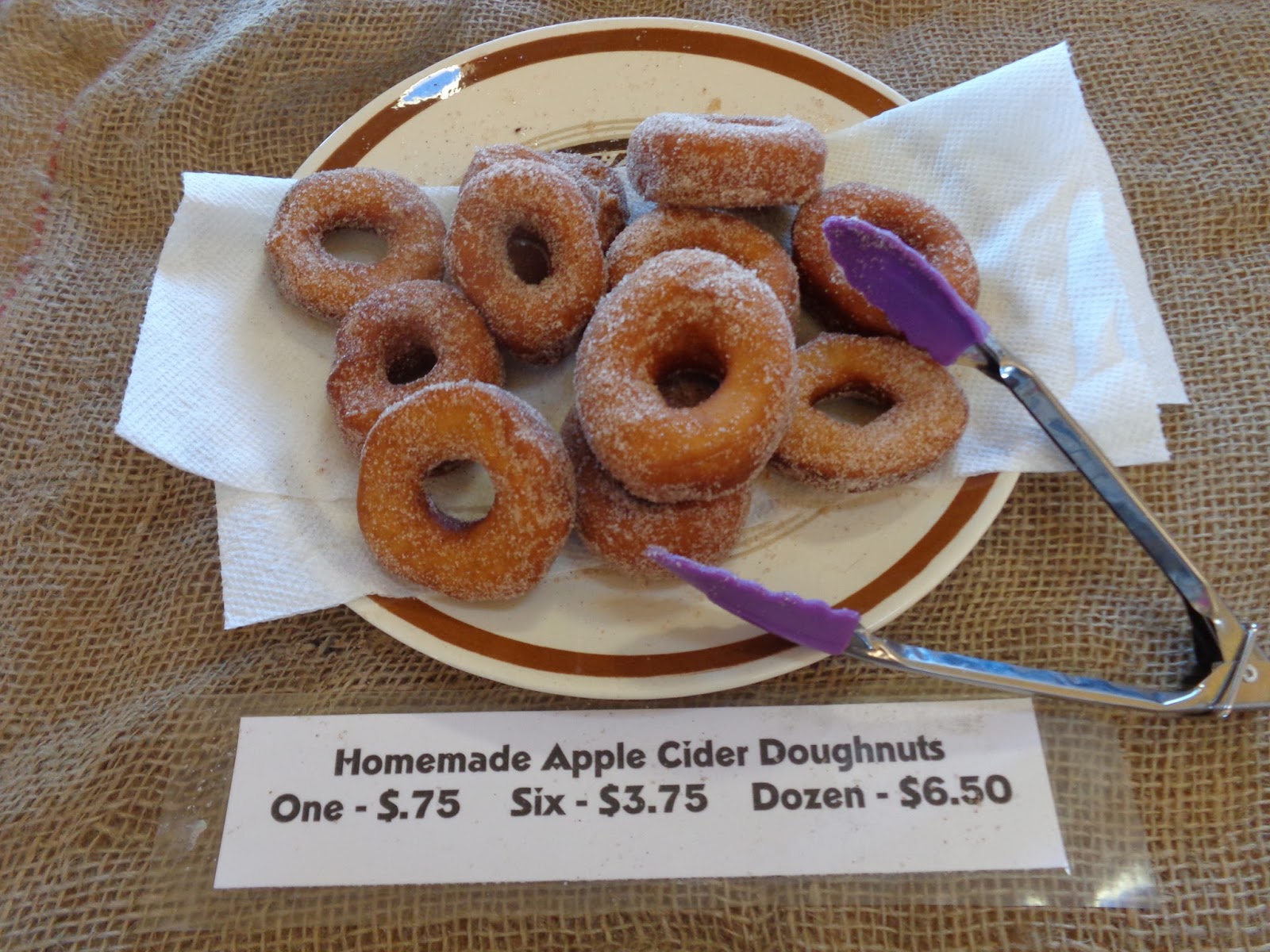
Wood fired pizza with apple cider, the smell of pine and apple wood burning in the air, an idyllic outdoor seating area away from the harried pace of modern life. There's so much to love here. Nothing fancy, nothing modern, nothing expensive. Just timeless, simple pleasures.


In Muir Woods in California on our honeymoon. I believe in the magical and healing properties of the forest, for mind, body and spirit.

"Old age. I don't know when it really starts, and I'm not interested in finding out. Julia pretty much ignored the whole thing, and that may be the only real lesson there is for the end of our days. Just pretend like it isn't happening, until you have no choice but to accept reality. If you're lucky, like Julia, you'll die peacefully in your sleep after having enjoyed a dinner of onion soup." - Julia Child Rules: Lessons on Savoring Life by Karen Karbo
An onion soup at Pigalle in New York City, an old lunch haunt when I worked in the city. I turned 40 this year and I look forward to all the days ahead granted to me. I'm thrilled if I make it to old age.

"It's a great idea to analyze how screen time has changed your life and how it alters your behavior. If you don't like what you see, implement changes. Get comfortable again with real human connection and don't give so much power to the screen and what is behind it. Real life is in the present moment, happening right now. We never know how many days we have in front of us. Let's live them fully, not virtually." - Polish Your Poise with Madame Chic: Lessons in Everyday Elegance by Jennifer L. Scott, who also pens one of my favorite blogs, The Daily Connoisseur.
Have you seen the Rashida Jones advertisements for Verizon? One features her visiting her mother who ignores her when she tells her daughter to turn off her Wi-Fi. Her mother cannot wait to sit down and look at her tablet. Another has Rashida running out on a friend on movie night since the film isn't downloading fast enough. Apparently conversation must be a thing of the past. The most recent has her mother and two others visiting Rashida and they get carried away on how fast her network is. She tries to engage in conversation over a hot drink, but everyone is glued to their devices. The ad ends, "Get out of the past. Get Fios." Meant to be humorous, these commercials do not leave me laughing. I want to run back into the past sometimes. While there's so much that is wonderful about technology, the anti-social behavior of teens and adults and the addiction to these devices is a serious matter. What values are corporate America selling us?
No one was glassy-eyed, looking at their screens, scrolling mindlessly, when my mother brought over a homemade plum tart we enjoyed with coffee on the patio one warm day. The only tweets at that moment: birdsong.

"On the following morning the little hut on the Alm opened wide its doors and windows as if to drink up the early sunshine. Days went by. The warmth of the spring sun woke up first the little blue gentians - those with a white star in the center; then, one by one, all the other lovely flowers opened their petals. There were jonquils and red primroses and little golden rockroses with thorns on the edge of their petals. They all bloomed in their brightest colors while Peter watched the miracle taking place, as he had watched it every spring since he could remember. He had never quite seen the beauty of it, however, until Heidi had come to show him." - Heidi Grows Up by Charles Tritten, the first of two sequels written by Johanna Spyri's translator
Wildflowers in Rainier National Park in Washington state. My mother introduced me to the beauty of flowers as I have childhood memories of her garden, and I remember my grandparents' garden in Switzerland too, with pictures of my grandmother and mother if front of their blooming geraniums and my grandfather standing by giant sunflowers. Our society is so materialistic and we so emphasis "stuff" and upgrading, but we forget about what can be most fulfilling to the soul.

"She turned away, after a long moment, still speechless. It seemed to her that at last she had seen such splendour that, wherever she went, it would stay before her eyes. No matter what happened, she had lived through this moment. Even if she should go to the dismal old chateau there would still be something - something to which she could turn when she needed courage." - Heidi's Children by Charles Tritten
A courtyard in Santa Fe, New Mexico. I recall many of our travels fondly, and so often find my mind returning to the sacred, enchanting lands of the Southwest. That's what I love about travel, even if you are there for a short while, and maybe only once in your life, the memories linger far beyond. The same holds true for books.

"Still, who knew how the old mountain took retribution for having its insides clawed out.” - Whiter Than Snow by Sandra Dallas, a novel set in 1920 in a Colorado mining town
In Colorado, driving on the road from Durango into the mining town of Silverton. An oil spill caused by an EPA cleanup crew at a mine near Silverton has devastated the water supply, something we take for granted until it's tainted. Have we treated the mountains fairly in our nation's short history? Hardly.

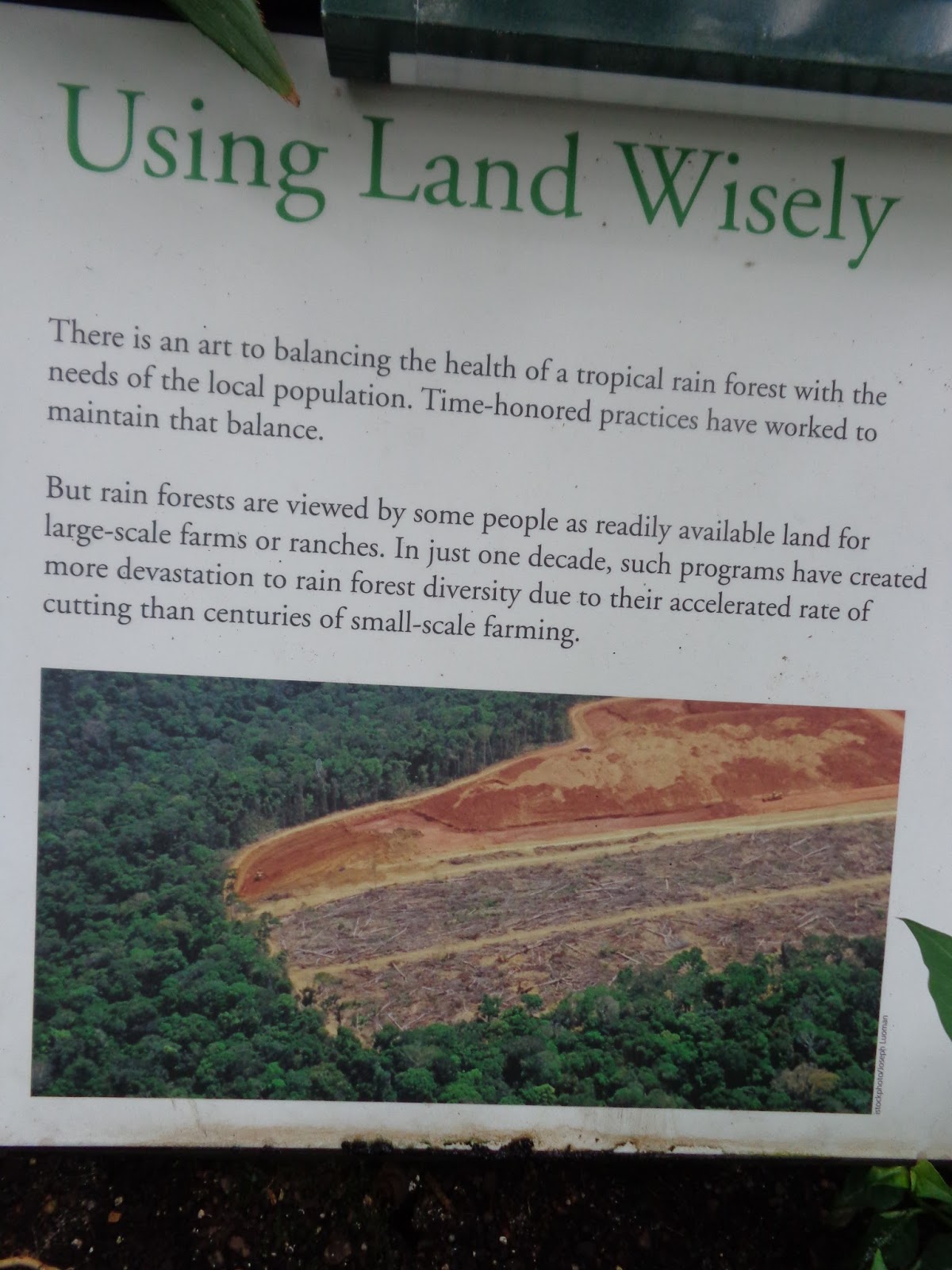
"They ravaged neither the rivers nor the forest, and if they irrigated, they took as little water as would serve their needs. The land and all that it bore they treated with consideration; not attempting to improve it, they never desecrated it." - Death Comes for the Archbishop by Willa Cather
At the New York Botanical Garden, a reminder we must care for our earth.
"Lincoln's heartbeat picked up a little, the way it always did when he rounded that last bend in the road and saw home waiting up ahead.
Home." - A Creed Country Christmas by Linda Lael Miller
Home to me always evokes happy thoughts of my husband, daughter, our two dogs, our wonderful neighbors, a place for a cup of tea, a comfortable bed, a fire on the patio, my cherished garden.

A storyteller at the Ramapough Powwow. Whether in written or oral form, let the wonder of stories fill your life with a little magic.

Goodreads is a favorite site to keep track of my reading lists (read and to-read) as well as quotes. I loved my storytellers and want to seek out more works by many of them, although Linda Lael Miller, whose books I read from library displays, isn't my cup of tea so I don't think I would read her again. Since we're a one-income family as I'm a stay-at-home mom, I'm using the library more than ever now, and we rarely see movies in theatres, enjoying the privacy and sanctuary of our own home and the frugality of free library DVDs.
These were my 2015 storytellers:
Gifts: (I requested the von Arnim and Scott books.)
At Home With Madame Chic: Becoming a Connoisseur of Daily Life by Jennifer L. Scott
Elizabeth and Her German Garden by Elizabeth von Arnim
Bringing Up Bebe: One American Mother Discovers the Wisdom of French Parenting by Pamela Druckerman
Polish Your Poise with Madame Chic: Lessons in Everyday Elegance by Jennifer L. Scott
Gifts for Grace:
Beatrix Potter: The Complete Tales
Winnie-the-Pooh, by A.A. Milne
When We Were Very Young by A.A. Milne
Christmas in the Morning by Pearl S. Buck
A Child's Christmas in Wales by Dylan Thomas
Loan from a friend:
The Shoemaker's Wife by Adriana Trigiani
Thrift Shop:
Cannery Row by John Steinbeck, 50 cents from the C.A.T.S. Resale Shop in Westwood, New Jersey
Better World Books, my favorite go-to online used book retailer for great prices, efforts to promote recycling (many books are library discards) and promoting literacy around the world.
The Indifferent Stars Above: The Harrowing Saga of a Donner Party Bride by Daniel James Brown, $4
Frightful's Mountain, by Jean Craighead George, $2.50.
The Solitary Summer by Elizabeth Von Arnim, $4
The Blue Jay's Dance: A Birth Year by Louise Erdrich, $4
Whiter Than Snow by Sandra Dallas, $4
Charlotte in New York by Joan MacPhail Knight, $4, a gift I bought for Grace's first birthday for her library.
Charlotte in London by Joan MacPhail Knight, $4, also for Grace,
Local Book Shop:
When Calls the Heart by Janette Oke, from The Well Read book store in Hawthorne, New Jersey, about $15.
Library
Brookfield Days, Caroline #1, by Maria D. Wilkes, from the Little House Chapter Books series, from the library
A Moveable Feast by Ernest Hemingway
Springwater by Linda Lae Miller
Living the Farm Sanctuary Life: The Ultimate Guide to Eating Mindfully, Living Longer, and Feeling Better Every Day by Gene Baur with Gene Stone
To Kill a Mockingbird by Harper Lee
Go Set a Watchman by Harper Lee
Clara's Kitchen: Wisdom, Memories, and Recipes from the Great Depression by Clara Cannucciari
Of Mice and Men by John Steinbeck
In the Land of the Big Red Apple, by Roger Lea MacBride (library book sale)
The Constable's Tale: A Novel of Colonial America by Donald Smith
Julia Child Rules: Lessons on Savoring Life by Karen Karbo
Heidi Grows Up by Charles Tritten
Heidi's Children by Charles Tritten
A Creed Country Christmas by Linda Lael Miller
A Quilt for Christmas by Sandra Dallas


