Showing posts with label The Kitchen in Englewood. Show all posts

Friday, June 10, 2011

Let's Go Back to The Kitchen


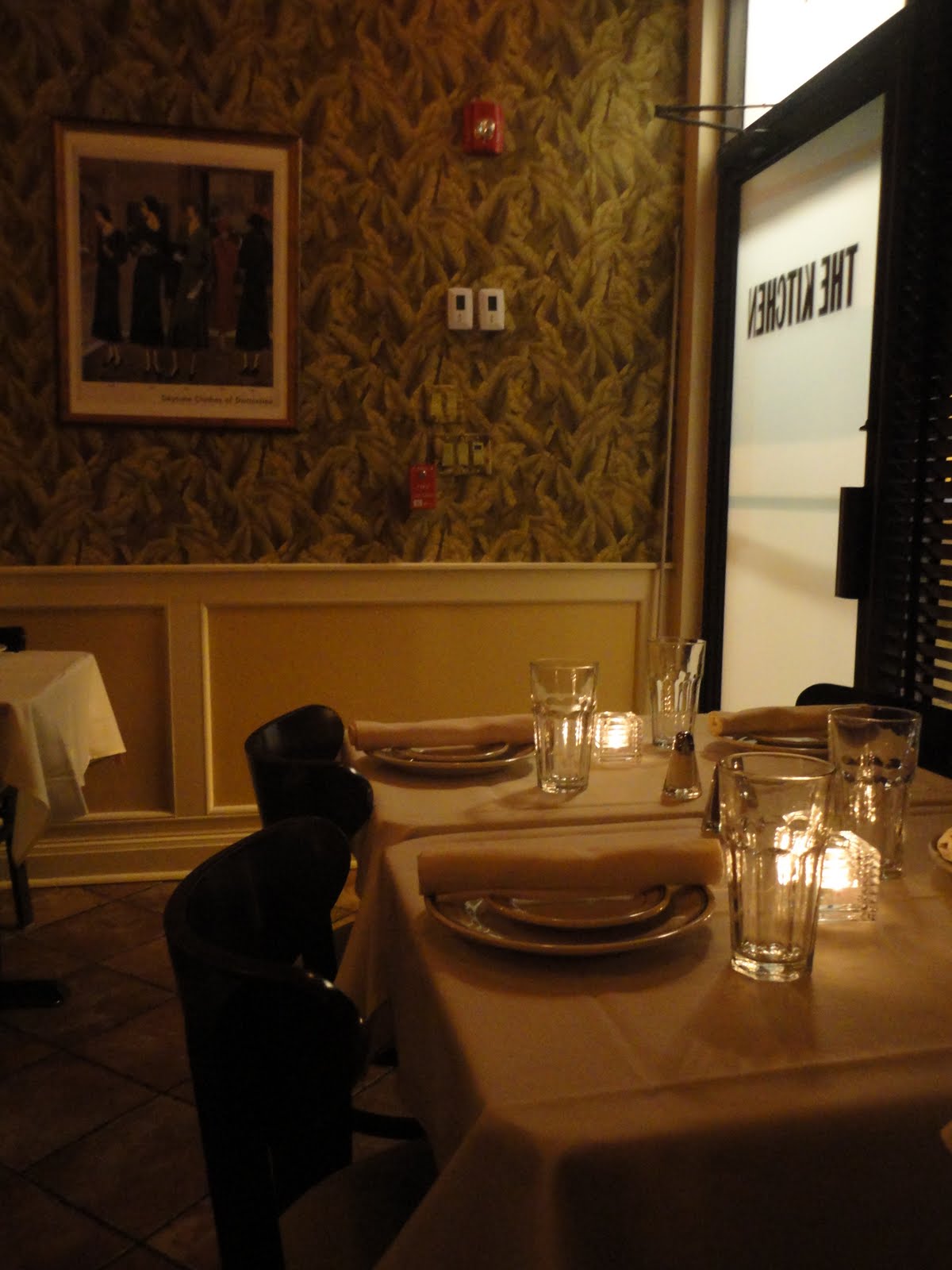
I love The Kitchen restaurant in Englewood, New Jersey. Probably because it combines so many things I love: using a lot of seasonal ingredients, celebrating American cuisine, its cozy dining room with Americana images on the wall from the early 20th century.

In a nod to parties during the prohibition era, they pass five complimentary appetizers. Since I'm a vegetarian, ours were all vegetable-based: potato pancakes, mini artichokes, mushrooms on toast, and my favorite, a date in a puff pastry roll (so unexpected!) No secret drinking here: we brought along a Mumm California Brut Rose.

Sharing the spring salad: strawberries and rhubarb with arugula in a poppy seed dressing, $8.


Grilled meat? No way. Their vegetarian plate: grilled king oyster mushrooms over quinoa with peas and carrots, white asparagus and Swiss chard, $20. Mushrooms are nature's mock meat for me.

My sweetheart Steve eats meat (I'm in an inter-dietary relationship!) He had the chicken with honey waffles. Since I'm not posting photos of anything I wouldn't eat, you'll just have to project it! I did have a bite of the waffles which were delicious.

Two sides come with the entrees to share: roasted parsnip puree (REALLY good) and collard greens.

And you thought we were too full for dessert. We couldn't resist the hot fudge sundae with homemade hot fudge sauce and two fresh baked cookies. Pricey at $8, but worth it. This is no Smucker's hot fudge!

From foodtimeline.org,

"Little is known with certainty about the sundae's birth: it originated in the late 1880s or early 1890s; one of the first published sundae recipes appeared in Modern Guide for Soda Dispensers in 1897; and sundaes were very popular by 1900. Many accounts of the sundae's invention have been published, but there is no definitive evidence about it. The best-known explanation for the sundae is that it was created to circumvent Blue Laws banning the sale of ice cream sodas on Sunday. Beginning in the colonial era, Blue Laws were promulgated to prohibit certain activities on the Sabbath." - Sundae Best: A History of Soda Fountains, Anne Cooper Funderburg

I love listening to Tuba Skinny, which plays a lot of music of the same era The Kitchen restaurant pays homage to, but it feels even more right on a hot sultry day or night. Since my heart's desire is a chef (don't be too envious, ladies. When I see him, he usually wants to order a pizza!), I'm partial to their cover of Bessie Smith's Kitchen Man, quite fitting for today's post.


Flashback to my last visit to The Kitchen.

Friday, February 18, 2011

On Our Plates, A Side of History

For a belated St. Valentine's Day celebration, my sweetheart and I went to The Kitchen in Englewood, New Jersey, which features American cuisine with a wink at the 1930s. From their site:

"The 1930's was a special era for America in terms of entertaining and dining out...With the repeal of Prohibition, cocktail parties with passed canapés grew in popularity even with the middle class. Americans had not legally been able to import alcoholic beverages for over ten years. Bourbon, an American spirit, became very popular among Americans and the Mint Julep became the signature drink of the Kentucky Derby, spreading through the nation as well. America was developing an identity for food and beverage."

Their dining room is tiny but cozy. American artwork adorns the walls, including this poster encouraging, "See America Visit the National Parks".

Did you know it was the Great Northern Railway who adopted the "See America First" slogan in 1906 to promote their resort facilities in northern Montana? Learn more.


It's bring your own wine here, and we brought some sparking wine and Crème de cassis for our own festive cocktails. Five complimentary appetizers are passed: mushroom puff pastries, spinach pastries, cheese puffs, eggplant with goat cheese and a sweet potato bite.

The vegetarian plate, $20, with quinoa, sauteed winter greens and king mushrooms. Two shared sides came for the table with the two entrees: tonight it was creamed spinach and carrots with Rösti potatoes, the potatoes a Swiss German dish (fitting, since my parents are both originally from Switzerland). Consider the dishes that immigrants brought, and food that developed on its own.

To share, a grown-up versions of a campfire classic, s'mores, $8. Graham cracker crust, chocolate ganache and homemade toasted marshmallows.

Short for "some mores," s'mores appeared first in the 1927 book Tramping and Trailing with the Girl Scouts, according to The Food Timeline.org.


Forget the latest in celebrity gossip, I find perusing food menus of days gone by far more fascinating. For food and history lovers alike, visit The Food Timeline's American food through the decades. Find everything from a 1939 New York Times article on "the herculean task of feeding 50,000,000 people....the number of visitors expected at the New York World's Fare of 1939;" what was served at Mother Goose children's parties in the 1950s, to what John F. Kennedy favored for lunch.

Sticking with the 1930s, consider a family dinner menu from Aunt Sammy's Radio Recipes Revised, Bureau of Home Economics, U.S. Department of Agriculture, 1931:

"Dinner menus for February"
Scalloped oysters, five-minute cabbage, pickled beets, jellied fruit; Lima beans in tomato sauce with crisp bacon, mashed rutabaga turnip, lettuce with tart dressing, fruit, chocolate drop cookies, roast beef, Yorkshire pudding, scalloped parsnips, turnip greens, pickled cherries, Washington pie.

Or in the later 1930s, the timely "Washington's Birthday Luncheon" (this was before Americans paid homage to our first President by going to the mall to buy sheets).

"Halves of oranges, with Maraschino cherries in center, chicken a la Maryland, with drum sticks, southern sweet potatoes, Virginia corn bread, cherry salad, Boston brown bread, chocolate log cake (cocoa roll), nuts, raisins, coffee, Washington punch."

Exploring our history extends to so many facets, not just our leaders or famous battles won and lost. History is everywhere, including on our plates, and it is worth devouring.