"Older people are always searching for treasure, but she thinks they look in the wrong places. If they knew about her herb garden, the roses in bloom, and Maman's horse, Beth is certain people would value all these things. They would love them like she does when she sits behind her house, breathing, dreaming." - From J.J. Brown's Brindle 24, set in New York state.
I went treasure hunting this autumn with my husband Steve and our infant daughter Grace. With a seven-month-old and only one income since I am a stay-at-home mom, we decided to take day trips instead of an extended vacation to save money and make it as comfortable as we could for ourselves and baby. I am capturing these memories in a diary series, with storytellers to entertain and inspire with their words. My treasures I seek are rarely things of large monetary value. The treasures we found in High Falls and New Paltz, New York: apples, peace and quiet in orchards, walks in a nature preserve, vegetarian food, and quality time spent together.
When I was researching apple orchards to go for picking this year, I had two requirements: a low-key, no frills farm without crowds and one that avoided or didn't use chemicals. I am in detox mode from my harried days commuting from New Jersey into New York City, seeking to avoid masses of people whenever I can.
Mommy Poppins gave a listing of options for low-spray and sustainable practice farms, since they say our climate isn't friendly for straight organics, which led us to the nearly-organic Mr. Apples. When walking the dogs I see those signs from landscapers warning "Pesticide-treated area" and a green thumb. I always thought a skull and crossbones would be a more fitting symbol for pesticides. Right next to one of these "green" lawns is the drain to a local reservoir. A clean environment is a part of my American dream. Why isn't it part of everyone's?
 Giving Grace as much organic food as possible will be a priority for us. From Alicia Silverstone's The Kind Mama, "Nasty chemicals used to grow conventional produce are up to 10 times more toxic to children's growing bodies than they are to adults. According to the EPA's Guidelines for Carcinogen Risk Assessment, children are exposed to 50 percent of their lifetime cancer risks in their first 2 years of life, and research done by both the FDA and eight of the leading baby food companies has led the CDC to single out as one of the main sources, not exposure to industrial pollutants or hazardous waste, but our food. Blood samples taken from children ages 2 to 4 showed that the concentrations of these pesticide residues are six times higher in children eating conventionally farmed fruits and veggies than in those whose parents gave them organics.
The Environmental Working Group found that 99 percent of apple samples tested positive for at least one pesticide residue, putting it on its "Dirty Dozen" list of fruits laden with pesticides, according to CBS News.

"No farmer's his own boss. He takes his orders from the sun and the snow and the wind and the rain." Daisy on Downton Abbey.

Honey, apple butter and red raspberry jam. There were a few other things for sale, like vinegars, but that was about it.

Old farm equipment repurposed for displays. No tractor ride needed, just stroll out into the orchard.

We were here on a Monday and there were just two others in the orchard. Heaven.
My heart happily remembers this moment, Grace in my arms, Steve reaching for the apples.


Our bounty, one peck of apples, $14.

In addition to apples for snacking, I've savored these on blustery fall mornings in apple cinnamon oatmeal and a warm apple crisp my chef husband Steve made. All the more enjoyable on two of my most favorite, comforting things in our kitchen: red-checked placemats (from a garage sale) and inviting dishes, here a blue and white plate that reminds me of my grandparents (from a charity resale shop). I like to reduce my impact by acquiring items second hand as often as possible, and to eat off of pretty dishes.
"Mother took the pie out of the oven and it hissed fragrant apple, maple, cinnamon steam through the knife cuts in the top crust. She was making her world beautiful. She was making her world delicious. It could be done, and if anyone could do it, she could." Death and the Dream, J.J. Brown

We just stopped for a beverage here, but I was so impressed by the vegan offerings at The Last Bite.

My lavender latte with soy milk.

A sign here recalls Helen Morgan, a torch singer of years past who lived in High Falls. So many shining stars of their day are largely forgotten now. My favorite old Hollywood stars are Dick Powell and Ruby Keeler. Whose star now will shine through decades from now, I wonder?

We read about the water being harnessed from the falls here for two centuries, powering cotton and woolen factories, flour, corn and plaster mills, a saw mill, cement factories, electrical generators, dyeing works, a leather tannery and a cooperage. Also too were signs about hydroelectric power which supplies thousands of homes. I considered how everything we do has an impact, good or bad, sometimes both.

I was observing the leaves on ground, fleeting works of art from nature each fall, and I spotted a spider, which is visible to me in the upper right corner over a twig since I know it's there. I was mindful not to tread on it. I think often of the life above us when I see the birds fly, and deer, chipmunks and other animals walking by, but not often enough about the world below our feet. I vow to tread lightly for their sake, both in my walk and in my journey.

A FrackFeeCatskills.org sign on a lawn here called to ban hydrofacking, the process to extract natural gas. Flashback to my post "Poison in the Well" for why I oppose fracking. The reasons are many, but the threat to the water supply from the chemicals used to frack and all of the wastewater it creates are on the top of the list of concerns. I see commercials regularly from oil companies, particularly during the nightly news, trying to convince the public about why natural gas is so wonderful, but ponder why they are trying to sell the masses on this? It's a bit like the ads Purdue runs with cartoon images of their farms and chickens. Can you imagine if their actual farms with thousands of chickens and slaughterhouses were shown?

I kept thinking about the idyllic scenery here, and as I flipped through a guide to the region, I saw how much of the upstate New York economy is tied to agriculture. Our breadbasket should not be polluted by these oil companies, nor the water supplies of these residents.
At a fracking protest where the singer Natalie Merchant, an upstate New York native and resident, sang, "New York was made to be frack-free" instead of "This land was made for you and me," a protester held a sign that said, "If we make the Earth sick we will never know health. Clean air and clean water are the only true wealth."
"Some believe that the shale holds an endless fortune - gas mined by the energy company. Not everyone needs more money, she says. I don't. My family doesn't. You might not realize it, but we have our riches here, and we have our peace. We have the forest, the wildflowers. They're not weighted the same way your treasures are, not bought and sold. So you don't recognize the value in them." - J.J. Brown's Brindle 24, a cautionary tale on fracking.
Pope Francis revealed his top 10 secrets to happiness, which included respect and care of nature, reported the Catholic News Service. Environmental degradation "is one of the biggest challenges we have," he said. "I think a question that we're not asking ourselves is: Isn't humanity committing suicide with this indiscriminate and tyrannical use of nature."
When discussing the song "America" off of her "Unrepentant Geraldines" album, singer/composer Tori Amos talked about America running through her veins wherever she goes in the world, maybe because her mother's people (eastern Cherokee) have been singing songs there and the song lines are there and it's in her DNA deep for thousands of years. She was interested in talking about not an America that Europe, Russia or elsewhere in the world sees but, "The other America that holds nature very close, Mother Earth very close. That doesn't see the earth as something to be used as a product. Not just consumerism."
"Clearly we as Americans have to think of our land and how it's being used. Native Americans would talk about seven generations, that you look ahead to seven generations, not just consuming for the next generation...and that type of thinking which was an ancient way of thinking is something we desperately need."
"Why did they all lay down
to sleep through the now
and if they all lay down
I'll be waiting for them
at the river bed
once they wake from their rest." - Tori Amos, America
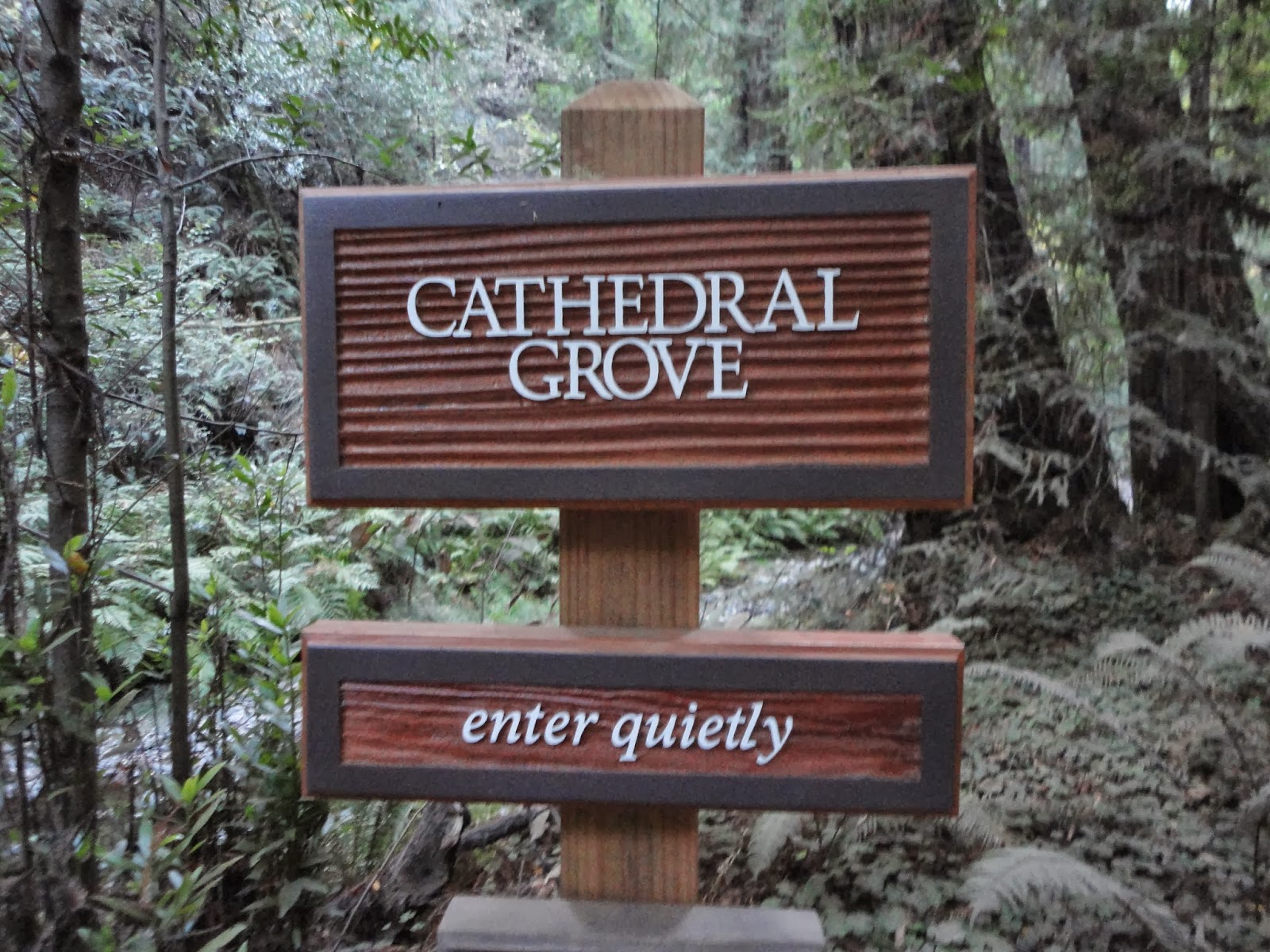
We came upon this display of Redwood driftwood, reminding us of the logging of the old virgin forests.


Looking at the image of the driftwood refashioned as an art display, I had a flashback of being in Barcelona, Spain, in Antonio Gaudí's Sagrada Família. Rick Steves' Spain 2007 guidebook reveals, "Part of Gaudí's religious vision was a love for nature. He said, "Nothing is invented; it's written in nature." His columns blossom with life, and little windows let light filter in like the canopy of a rain forest." Wherever I travel, in a nation across the sea or a sleepy town an hour away, I am always drawn to and reconnect with nature in small and grand scales. Nature is my religious experience.

We were off to Mohonk Nature Preserve. I hope to plant the seed of environmental stewardship in Grace. Nature books will definitely be in our bedtime routine, and I plan to use the library often.

Also making the happiness list for Pope Francis: "A healthy sense of leisure." He said the pleasures of art, literature and playing together with children have been lost. "Consumerism has brought us anxiety" and stress, causing people to lose a "healthy culture of leisure." Their time is "swallowed up" so people cannot share it with anyone.
An area to read and play at the nature preserve. An employee here talked about bringing his children here and being reminded of the magic of it all seen through their eyes. Grace loves to look at the sky and the trees. I do too.

Tori Amos, when talking about her song Oysters, spoke of being physically fed but feeling starved in a relationship of love. This can too include feeling starved in your job she says, something I personally felt at two different jobs in cubicles. I took pride in my work, but felt unsatisfied for years and yearned to do more with my life. I know so many in the same position. As Amos says, "You can feel starved in your career path. You go there everyday, you get your check, you're able to pay your bills but you're starving." After hearing one woman's story of feeling starved, she said, "I started thinking of an old Native American saying about "chop wood, carry water" and how when you feel starved you have to get back to nature, whereby nature starts to give you what you need. It's not that you need to go to Barney's or Selfridges or Topshop. You might that that's going to fill you, or food or escapism, but that's not what you need."
"I throw back my head, and, feeling free as the wind, breathe in the fresh mountain air. Although I am heavy-hearted, my spirits are rising. To walk in nature is always good medicine." - Jean Craighead George's On the Far Side of the Mountain.

"We're close to where the nature preserve starts now, Charlotte says to Henry. The magic begins here. Can you feel it? She suspects he probably can't. She walks here daily, looking for something, peace mostly. The forest gives her more than she comes looking for, every time." - J.J. Brown, Brindle 24

Native American words are so often in the place we inhabit, of mountains, rivers and below, a mountain ridge. A sign here talks about Shawangunk being renamed Shogum by the Dutch settlers, and that Shawangunk may mean, "in the smoky air," a reference to the burning of a Lenape village by the Dutch. "Both names represent a mountain that provides habitat for plants and animals, and scenic and recreational opportunities for people."

When I read Jean Craighead George's My Side of the Mountain upon the recommendation by Bill Skees of the Well Read book shop in Hawthorne, New Jersey, the fictional story of a young boy living off of the land in upstate New York, I thought this transplant from New York City was just living as the Native Americans did. It was no surprise the author penned Native American tales too, like The Talking Earth, about a young girl and her spiritual search in the Florida Everglades after doubting the wisdom of the elders. I'm drawn to the Native American culture very much for their respect of both the earth we inhabit and the animals and plants here too.
"Charlie Wind once told me we must keep the animals on Earth, for they know everything: how to keep warm, predict the storms, live in darkness or blazing sun, how to navigate the skies, to organize societies, how to make chemicals and fireproof skins. The animals know the Earth as we do not." - The Talking Earth
Humans so often think they are the superior species, or have some sense of entitlement to how we treat, or mistreat, animals for food, entertainment and other uses as we see fit. I have nothing but awe for the animal kingdom.
"We humans will never know how meadows or mountains smell, but deer and horses and pigs do. Bando sniffs deeply and shakes his head. We were left out when it comes to smelling things, he says. I would love to be able to smell a mountain and follow my nose to it." - Jean Craighead George's On the Far Side of the Mountain


Steve's kale salad with tenderized avocado, olive oil and lemon, topped with cashews, raisins, carrots and onions.

I feel a connection to upstate New York with the slower pace of life, less congestion, and gardens at so many homes. I wonder if maybe we'll live here one day or someplace like it, and lead a quieter life away from crowded, expensive northern New Jersey. Do you picture another place for yourself one day?